
 EN
EN

Choosing the right paper cutter for packaging is one of the most consequential equipment decisions a packaging plant manager can make. The wrong choice leads to inconsistent cut quality, production bottlenecks, and elevated waste rates that erode margins over time. When the stakes are this high, understanding exactly which features drive performance is not optional — it is essential.
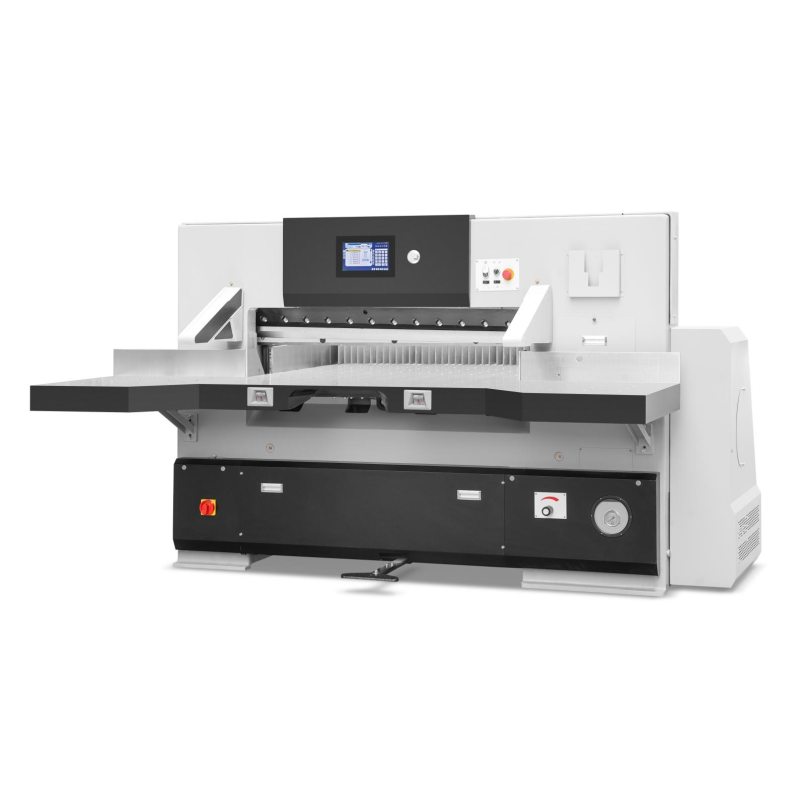
A paper cutter for packaging must handle demanding production schedules, diverse substrate types, and tight dimensional tolerances. Unlike cutters used in office or print-shop environments, an industrial paper cutter for packaging deals with high-volume runs, varied paper weights, and the constant pressure to minimize downtime. This guide examines the features that separate a capable paper cutter for packaging from one that simply cannot keep pace with modern packaging demands.
Cutting Precision and Dimensional Accuracy
Why Tolerances Define Output Quality
In a packaging plant, every millimeter of deviation can mean a misaligned box blank, a warped sleeve, or a label that does not register correctly. A paper cutter for packaging must deliver repeatable dimensional accuracy across every sheet in a production run. When you evaluate a paper cutter for packaging, look for machines that specify cutting tolerances of plus or minus 0.1 mm or better, because tight tolerances reduce rework and downstream waste significantly.
The backgauge system is the component most responsible for dimensional control. A high-quality paper cutter for packaging uses a motorized, programmable backgauge that positions each stack with precision before the blade descends. CNC-controlled backgauge positioning means a paper cutter for packaging can store and recall hundreds of job settings, eliminating manual measurement errors and enabling fast job changeovers on a busy production floor.
Blade Quality and Cutting Force
The blade is the heart of any paper cutter for packaging. Hardened steel blades with appropriate geometry produce clean, burr-free edges on coated boards, laminated stocks, and multi-ply materials commonly used in packaging. Hydraulic cutting systems found on industrial-grade paper cutter for packaging models deliver consistent force across the full cutting width, preventing blade deflection that causes tapered cuts on wide format sheets. Choosing a paper cutter for packaging with a hydraulic drive is therefore strongly advisable for plants processing thick or dense substrates.
Throughput Capacity and Automation Level
Matching Machine Speed to Production Demand
A paper cutter for packaging that cannot keep pace with upstream printing or converting equipment creates a bottleneck that stalls the entire line. Throughput is determined by cutting cycles per minute, maximum stack height, and the speed of the backgauge return. When selecting a paper cutter for packaging, match the machine's rated throughput to your peak daily volume, not your average volume, to ensure capacity headroom during busy periods.
Stack height capacity is a practical indicator of how efficiently a paper cutter for packaging handles bulk work. A paper cutter for packaging with a cutting height of 80 mm or more can process larger stacks per cycle, reducing the number of manual reloads and increasing net output. For high-volume packaging operations, this difference in stack capacity translates directly into labor savings and faster order fulfillment.
Programmable Control and Job Memory
Modern packaging plants run many different SKUs, and a paper cutter for packaging that requires manual reconfiguration for each job consumes valuable time. An advanced paper cutter for packaging features a programmable controller with job memory, allowing operators to recall complete cutting programs at the push of a button. This programmability also reduces the risk of operator error, which is a significant source of waste when a paper cutter for packaging is used for short-run, high-mix packaging work.
Some models of paper cutter for packaging offer touch-screen interfaces with graphical job programming, making training faster and reducing dependence on highly skilled operators. When a paper cutter for packaging can be operated reliably by trained but non-specialist staff, the plant gains scheduling flexibility and reduces vulnerability to absenteeism on critical production days.
Safety Systems and Operational Reliability
Built-In Safety for Industrial Environments
A paper cutter for packaging operates in fast-paced industrial environments where operator fatigue and production pressure create conditions for accidents. Safety features are therefore non-negotiable when evaluating any paper cutter for packaging. Essential safety systems include two-hand activation controls, which prevent the blade from cycling unless both hands are engaged simultaneously, and infrared light beam guards that halt the cutting cycle if any obstruction is detected in the cutting zone.
A well-designed paper cutter for packaging also incorporates mechanical blade safety locks that secure the blade in the raised position during paper loading and unloading. Plants operating in regulated environments may also need a paper cutter for packaging that complies with recognized machinery safety standards, since compliance protects both workers and the business from liability. Never compromise on safety features when comparing models of paper cutter for packaging.
Durability and Maintenance Requirements
A paper cutter for packaging is a long-term capital investment, and its total cost of ownership depends heavily on mechanical durability and ease of maintenance. A robust paper cutter for packaging uses heavy-duty cast frames that resist vibration and maintain alignment over years of continuous use. Look for a paper cutter for packaging with accessible service points, clear maintenance schedules, and readily available spare parts, particularly blade replacement kits and backgauge drive components.
Hydraulic systems in a paper cutter for packaging require periodic fluid checks and seal inspections, but they generally offer longer service life than mechanical alternatives. A paper cutter for packaging that is built with quality hydraulic components and proper sealing will sustain consistent cutting performance for many years, making it a reliable partner in packaging production.
FAQ
What cutting width should a paper cutter for packaging have?
The cutting width of a paper cutter for packaging should match the largest sheet size your plant regularly processes. Most industrial packaging plants benefit from a paper cutter for packaging with a cutting width between 900 mm and 1200 mm to handle standard board and paper roll widths without requiring pre-cutting.
Is a hydraulic paper cutter for packaging better than a mechanical one?
For most packaging plant applications, a hydraulic paper cutter for packaging offers advantages in cutting force consistency, blade life, and quieter operation compared to mechanical designs. A hydraulic paper cutter for packaging is especially preferred when cutting thick board, laminated stock, or large stacks where uniform pressure across the blade is critical.
How often should the blade on a paper cutter for packaging be replaced?
Blade replacement frequency for a paper cutter for packaging depends on material type, stack density, and daily cutting volume. In a high-production packaging environment, the blade of a paper cutter for packaging may need replacing every few weeks to every few months. Regular inspection for edge dulling and cut quality degradation is the best indicator that blade replacement is due.